Martyn's Law applies if you run a venue that holds 200 or more people
The Terrorism (Protection of Premises) Act 2025 puts a legal duty on the people who run venues where the public gather. This page explains where the law came from and what it asks in general terms.
The downloadable guide sets out what applies to a venue of your size, and by when.
Last updated 1 October 2026Why the law exists
On 22 May 2017 a bomb was detonated in the foyer of Manchester Arena as a concert ended. Twenty-two people were killed. One of them was Martyn Hett, who was 29. His mother, Figen Murray, spent the years that followed campaigning for a law that would make the people who run venues prepare for an attack rather than hope one never comes. The Act carries her son's name. It received Royal Assent on 3 April 2025.
Every venue already plans for fire. Until now nothing required the same for a terrorist attack. That is the gap Martyn's Law closes.
What the Act asks of you
It applies across England, Wales, Scotland and Northern Ireland, to premises and events where 200 or more people, including staff, can reasonably be expected to be present at the same time. It works in two tiers.
The standard tier covers 200 to 799 people. It asks you to put procedures in place that would reduce harm if an attack happened at or near your premises: how people get out, how they are kept in, how the site is secured and how you would communicate. Written down and proportionate to the site. It does not ask you to change the building.
The enhanced tier covers 800 or more. It asks for the same procedures, plus measures to reduce the vulnerability of the premises itself, a document setting out both, submitted to the regulator, and a named senior individual who is responsible for it.
The regulator is the Security Industry Authority (SIA). The Government published its statutory guidance on 15 April 2026, the SIA's own guidance is expected in autumn 2026, and the Government has said commencement is expected in spring 2027, with at least 24 months from Royal Assent. No date has been fixed. Places of worship, childcare, and primary, secondary and further education stay in the standard tier whatever their size. Universities do not. Below 200 the Act does not apply, though the thinking behind it still does.
The Act does not name any product, and does not require you to buy any particular measure. What it requires is a competent, proportionate judgement about your own premises, written down. The Home Office puts it this way: “The Government’s intent is that those responsible for premises and events in scope can comply with the Act without needing to buy specialist services.”
What you can actually do to protect your site
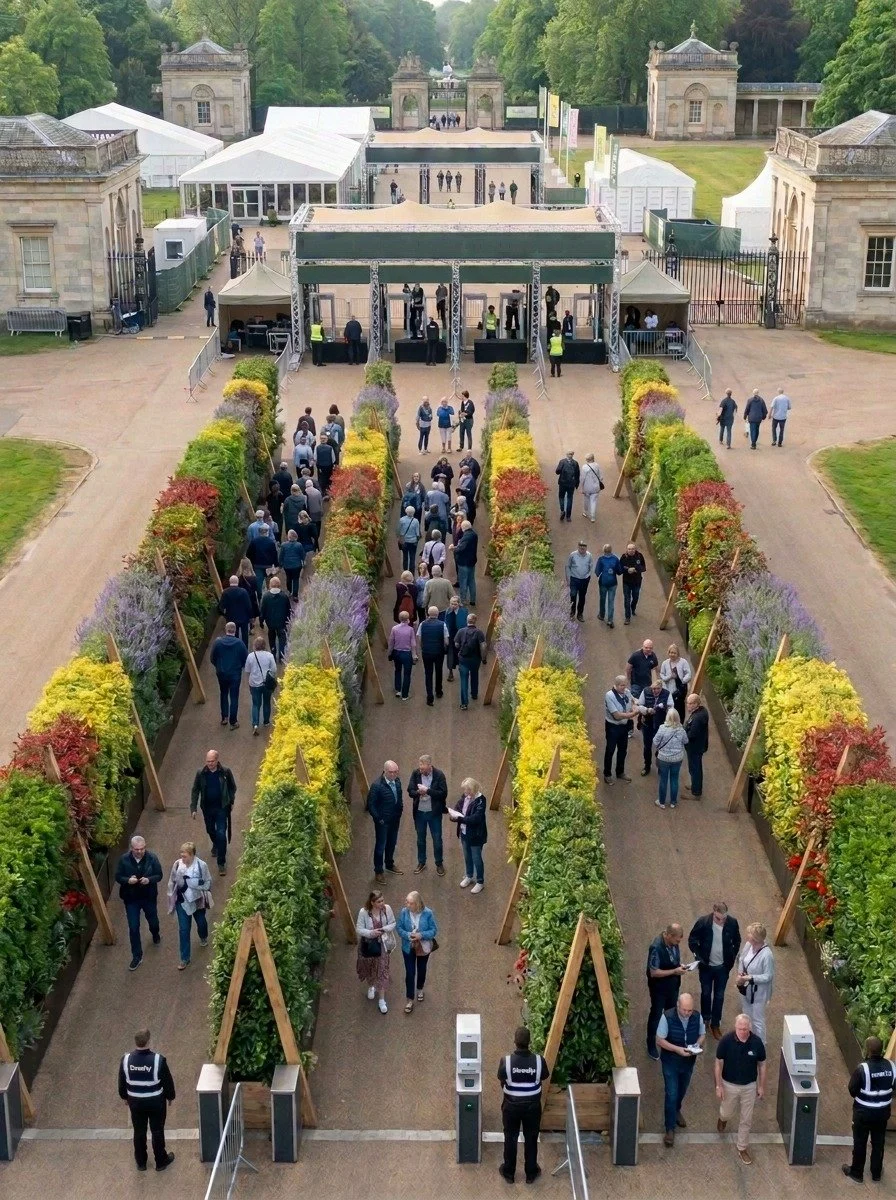
The Act leaves the choice of physical measures to you. Broadly there are five options, and none is right everywhere.
Doing nothing physical, with the reasoning written down. For some premises that is a defensible conclusion.
Procedures only, which is the whole of the standard tier’s duty and the procedures half of the enhanced tier’s.
Vehicle mitigation, such as bollards and blockers, a mature field that addresses a vehicle reaching a crowd at speed.
Conventional hardening, such as blast walls and reinforced construction, well understood and suited to sites where the stand-off, footprint and appearance work.
Engineered planting, which is what we do, so read that one knowing it.
The Martyn’s Law Guide takes each one in turn, with five questions to ask anyone selling you a protective measure, including us. Whichever you pick, the thing you will be asked to produce is the judgement, written down.
The Home Office states: “Neither the Home Office, SIA, nor the National Counter Terrorism Security Office endorse any third-party products offered by the private sector in respect of compliance with this legislation.” That includes ours.
This page is general information only, not legal or professional advice. Check the current position on GOV.UK before acting.
The guide for your venue size
The detail depends on how many people your premises can hold, so the guide comes in three editions: under 200, 200 to 799, and 800 or more. Each sets out what the Act requires of a venue that size, and by when, checked against GOV.UK on 29 September 2026. Tell us the size of your site and you get the edition written for it.